Easter Walk in Wonderland – Clue 6
YOUR SECRET LETTER IS: L
Make sure you write this letter down! Here’s some EGGciting history about where you are right now:
Thorncroft Manor
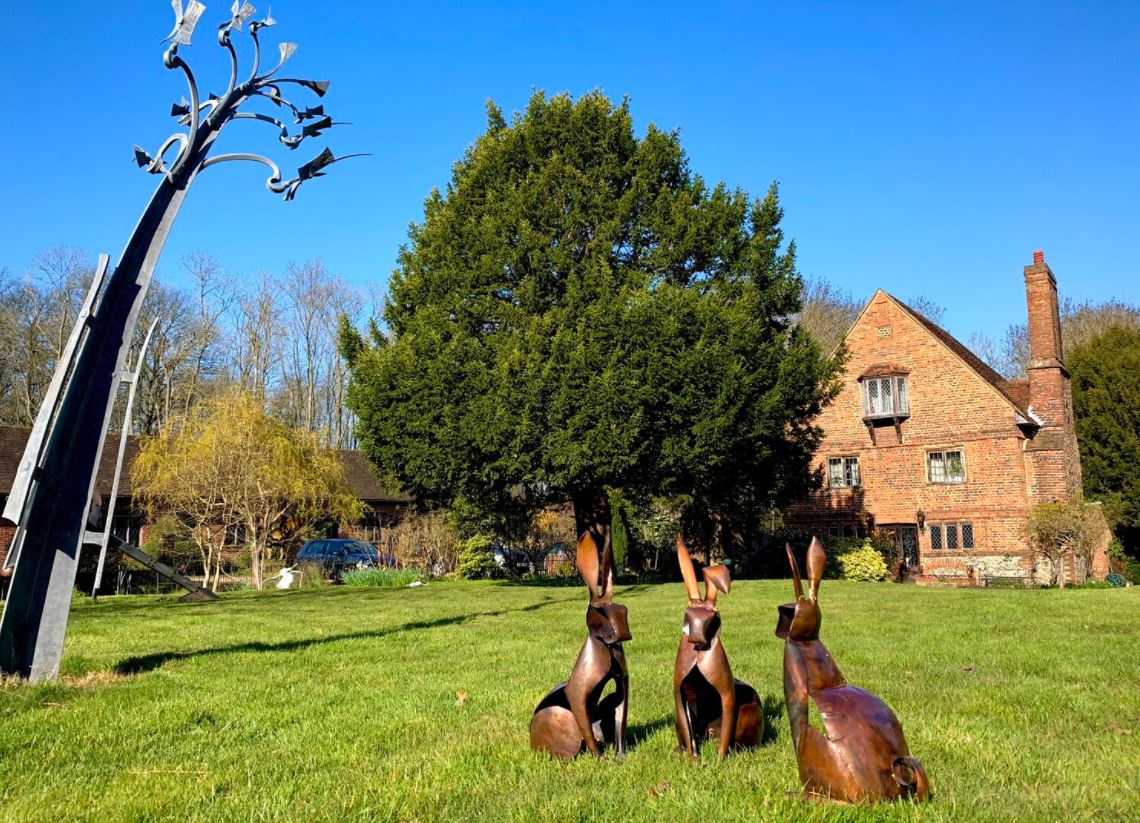
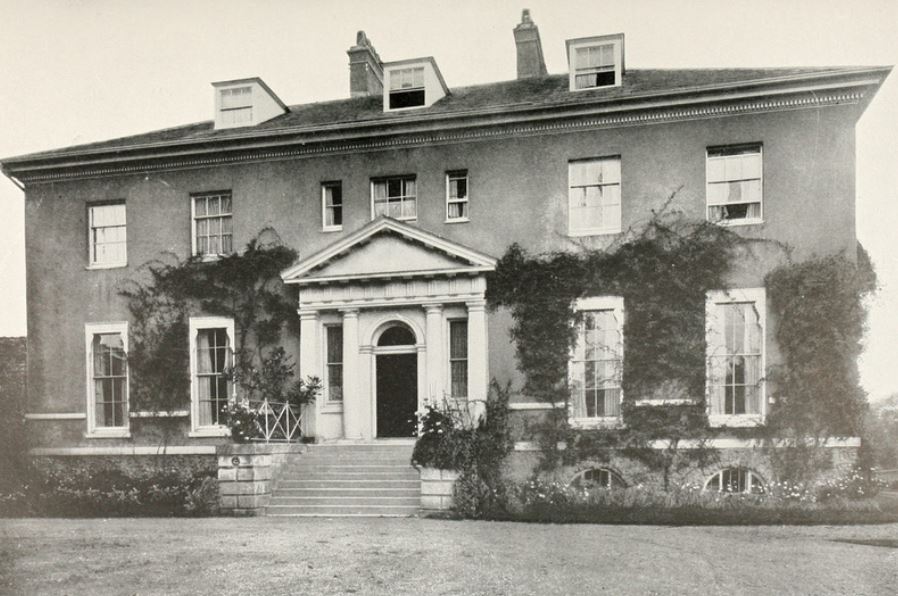
There has been a manor on this site for over 1000 years. Thorncroft Manor has an interesting history being one of the two feudal manors of Leatherhead from Norman times. It was held by Merton College, Oxford from 1266 to 1904. The house was re- built in its present form in the 1770’s in an Adamesque style, with a modern wing of mirrored glass built in the 1970’s. During WW2 the Canadian army occupied the house and during the 1960’s it was a boarding school for girls. It is now owned by Halcyon Offices Ltd, who hire out office accommodation in the building.
Easter Walk in Wonderland – Clue 5
YOUR SECRET LETTER IS: B
Make sure you write this letter down! Here’s some EGGciting history about where you are right now:
River
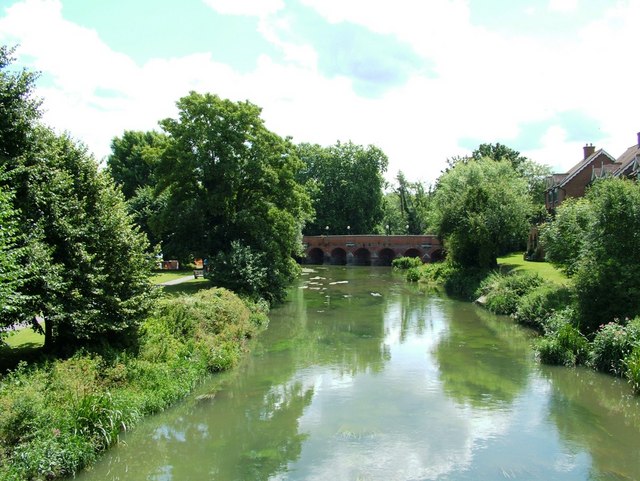
Make sure you keep an eye out for a special landmark a little further up the river, The Shell Bridge. It is one of three listed bridges in the town and it stands in the grounds of Thorncroft Manor. There is no access to the iconic bridge as it’s on private land. The bridge was constructed as an ornamental feature in parkland laid out by Capability Brown in the late 18th century and is mainly made of flint. It has a large inverted scallop shell in place of the keystone and similar shells in the spandrels at each side.
The bridge was renovated and strengthened in 1999 by a group of Canadian engineers working on the Terra Nove project. The restoration project was dedicated to the memory of the Canadian servicemen who were billeted in Thorncroft Manor during the Second World War. From the 17th century to the early 20th century the river had a reputation for excellent fishing, especially trout.
Easter Walk in Wonderland – Clue 4
YOUR SECRET LETTER IS: A
Make sure you write this letter down! Here’s some EGGciting history about where you are right now:
The Town Bridge
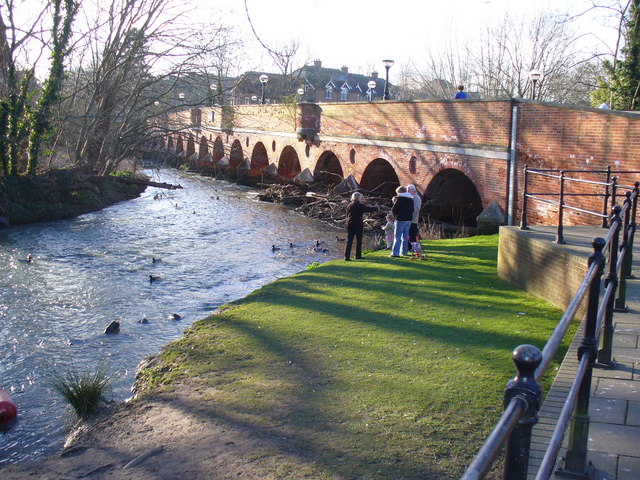
There has been a bridge on this site since the 13th Century. The other means of crossing was by a ford immediately upstream of the bridge which was probably still in use until the bridge was widened in 1824.
According to a common practice, the bridge used to be closed by a bar, except when the ford was flooded. In 1362 a licence was granted to collect money for the repair of a bridge here. An unknown benefactor left land in Fetcham for its repair, but in 1782 an Act was passed making it a county bridge, providing for its widening, and for the sale of the land given for its maintenance. Looking right, two railway bridges can be seen beyond the modern road bridge. The 4 arched bridge built in 1867 by the London, Brighton and South Coast Railway is to an elaborate design insisted upon by Thomas Grissell, then the owner of Norbury Park, as a condition of allowing the railway through his land. Downstream is the London and South Western Railway bridge built in 1885 when the line was extended to Bookham and Effingham.
Next to the bridge stands the The Running Horse Public House which dates back to 1403, when the pub was built on land belonging to the church. This is one of the oldest buildings in Leatherhead. Known once as Rummyings House, it served “noppy ale” by the infamous Elynour Rummyng, who featured in a poem & “The Tunnying of Elynour Rummying” by John Skelton, Henry VIII’s Poet Laureate. Verses are still displayed on the pub’s walls. Legend has it that Elizabeth I once spent a night at The Running Horse when floods made it impossible to cross the River Mole. It is also rumored that in the 17th century the pub was used as a frequent meeting place for smugglers.
Easter Walk in Wonderland – Clue 3
YOUR SECRET LETTER IS: B
Make sure you write this letter down! Here’s some EGGciting history about where you are right now:
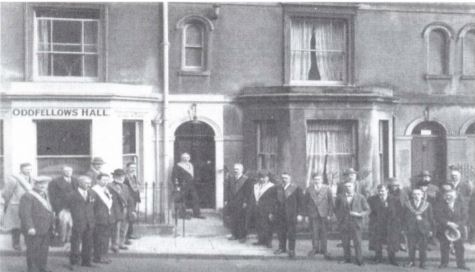
Oddfellows is a friendly society and mutual. Since the beginning of 1800 they have remained religiously and politically independent.
Three Links
Look at the top of their logo and you’ll see their ‘Three Links’ symbol. It stands for Friendship, Love & Truth, which is the motto of the Oddfellows Order. The use of signs and symbols played an important role in early Society days, as many workers were illiterate and proved essential for communication.
Several theories aim to explain the name of “Odd Fellows”. In the 18th century, major trades were organised in guilds or other forms of syndicates, but smaller trades did not have equivalent social or financial security. One theory has it that “odd fellows” people who exercised unusual, miscellaneous “odd trades” eventually joined together to form a larger group of “odd fellows”.
Oddfellows pubs
Public houses were often used as the base for regular Society business. When members met, they often ‘took something for the good of the house’. To secure such lucrative trade, landlords were willing to name their pubs after them. Oddfellows Arms remains a popular pub name to this day. The first meetings in Leatherhead were in the ‘Lodge Room’ at the Dukes Head pub at the top of the High Street before they moved to this building for their meetings in 1930’s.
Easter Walk in Wonderland – Clue 2
YOUR SECRET LETTER IS: T
Make sure you write this letter down! Here’s some EGGciting history about where you are right now:
Clock at 23 High Street
In October 1995, the Plaque and clock was installed in memory of John Dyer 1926-1994. “This commemorative clock was commissioned by friends and townspeople as a tribute and lasting memory in recognition of the time and resource so generously given to the town he loved”.
John owned Cradlers House Jewelers further up the High Street and served as Chair of Leatherhead Chamber of Commerce. The surround of the clock was made at the Fire & Iron Gallery in Leatherhead. They also made many of the iron railings and decorative features in and around Leatherhead including the tops of the alleyways and the railings at the bottom of the High Street.